What Clean Concrete Actually Means at a Recycling Scale
Clean concrete makes good base material. Dirty concrete makes a pile nobody can sell, so the scale house asks the same three questions every time.
September 1, 2026 · 4 min read
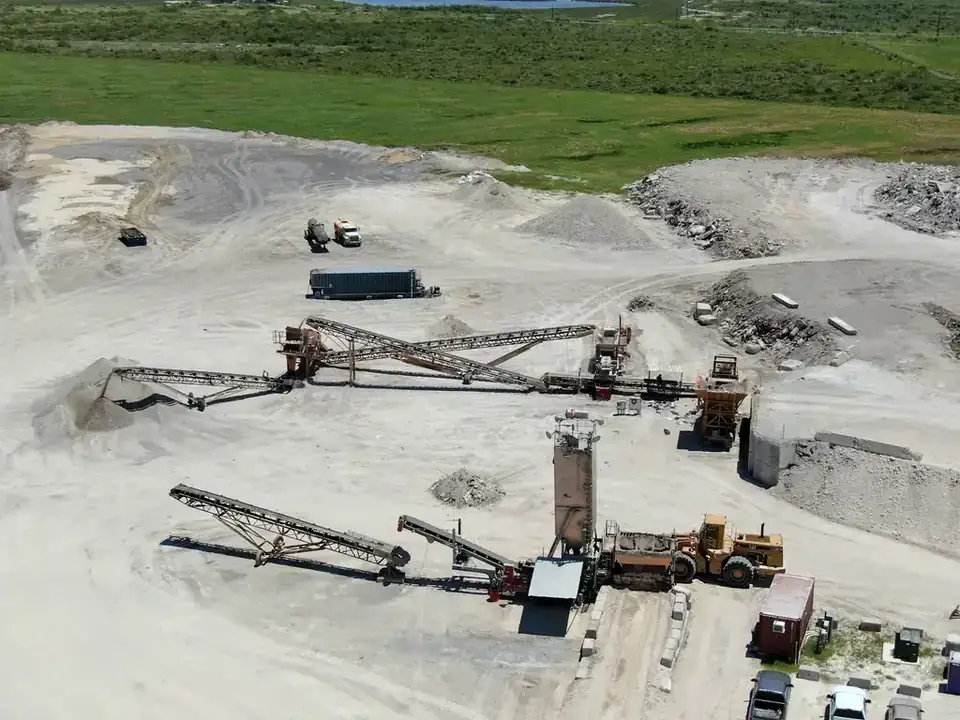
Our recycling yard at 3274 TX-35 in Aransas Pass runs on one simple trade. You bring us broken concrete, we run it through the crusher, and what comes out the other side is base material, sold by the load off the same scale you drove in on. That trade only works if what goes in the crusher is actually concrete. Everything else in this article comes down to that one line.
Hit the scale first, every time
If you've never brought a load to a materials yard before, the routine is not complicated, but it matters. Pull onto the scale before you dump anything and ask permission first, the same way the big trucks do it. That's not a formality we made up to slow you down. It's how we weigh what came in, know what's leaving as product, and keep the yard running the way a working plant needs to run, with trucks moving and nobody guessing at load sizes. A belly dump full of demolition rubble crosses the scale. So does a pickup with a couple of buckets of broken sidewalk in the bed. The scale is the first stop either way, not an afterthought.
What counts as clean
Clean concrete means concrete. Old sidewalk, curb, driveway slab, foundation, footing, broken fence post concrete, demolition rubble from a job site. It can be broken up rough, it doesn't need to be sorted into neat pieces, and it doesn't need to be a certain size before you bring it. What it can't have riding along with it is dirt, plastic sheeting, trash, wood, or a heavy load of loose rebar. A little bit of embedded rebar sticking out of a chunk of foundation is normal and we deal with it at the crusher. A load that's mostly dirt with some concrete mixed in, or a load with construction trash bagged in with the rubble, is a different problem entirely.
Why contamination is the whole ballgame
Here's the part that isn't obvious if you've never worked a crusher. Everything that goes into that machine comes back out as material somebody else is going to use, on somebody else's project, under their own building or driveway or parking lot. A crushed concrete base product with dirt mixed through it doesn't compact the same way clean crushed concrete does. It holds water differently. It settles differently. A contractor buying base by the load from our scale house is trusting that what he's getting is consistent, because he's going to spread it, compact it, and build on top of it, and he's not going to dig it back up afterward to check. If we let dirty loads through, that trust doesn't hold, and neither does the base course somebody poured a slab over.
Plastic is its own problem. It doesn't crush, it doesn't compact, and it shows up later as a strip of vapor barrier or a torn contractor bag working its way to the surface of a stockpile. Trash is the same story, just uglier. None of it belongs in a load of clean concrete, and none of it belongs in the base material that comes out the other end.
What we can't take
- Loads that are mostly dirt or fill, with concrete mixed in as a minority of the load
- Concrete with heavy loose rebar, mesh, or embedded steel beyond what's normal in a broken slab or foundation section
- Plastic sheeting, vapor barrier, or bagged construction trash riding with the load
- Asphalt mixed in with concrete without separating the two
- Loads with wood, drywall, or general demolition debris that isn't concrete
What comes out the other end
Run clean concrete through the crusher and you get crushed base, the kind of material that goes under roads, driveways, parking lots, and pads. Our yard also sells sand, riprap, and topsoil off the same scale, so if you're hauling in a load of rubble and hauling out a load of base for a different job, you can do both stops in the same trip. That's the whole point of a recycling yard sitting next to a road crew's territory. Concrete that would otherwise sit in a landfill goes back into the ground as material somebody actually needed.
If you're not sure your load qualifies
Call the yard before you drive out with a full truck. It's a five-minute conversation and it saves you a wasted trip if what you're hauling has more dirt or trash mixed in than you realized. We'd rather talk you through it on the phone than turn a truck around at the scale. And if you're a small operator bringing in a modest load, a couple of buckets of rubble from a driveway tear-out or some broken fence post concrete, that's exactly the kind of load this yard was built to take. You don't need to be running a fleet to use the scale. You just need clean concrete and a little patience for the process, the same as anybody else who pulls in.
Our Aransas Pass yard is open Monday through Friday, 7 a.m. to 6 p.m., at 3274 TX-35, and the number there is (361) 489-7198. Our Austin yard and corporate office, 4108 Nixon Ln, keeps the same hours and can point you toward Aransas Pass if that's the closer stop for a load you're hauling from the coast.
Aaron Concrete Contractors, (512) 926-7326
Call (512) 926-7326More articles
Slip Form Barrier vs. Precast Barrier: How the Choice Actually Gets Made
Neither barrier type is better. They solve different problems, and the job in front of you usually answers the question before anyone has to argue about it.
Curb Poured by Machine and Curb Poured by Hand
A curb machine can run a straight line all day. It's the radii, the returns, and the tie-ins where a crew with a float earns its keep.