Austin, TX
(512) 926-7326

STA 00+00 · The work, not a stock photo of it

Gallery

Aaron Concrete has years of experience providing general contracting services across central Texas, and highway road construction is where the crews spend most of their time. Se habla Español.

STA 08+00 · On the road

Mainline paving and barrier

The pour, the finish, and the fleet that gets material to both.

This is the part of the job the public actually drives past: concrete going in over rebar-tied forms, a crew raking and screeding it before it sets, and a slipform paver running barrier wall in one continuous pass. None of it is decorative. Every frame below is a job Aaron Concrete's own crews built, not a stock photo standing in for one.
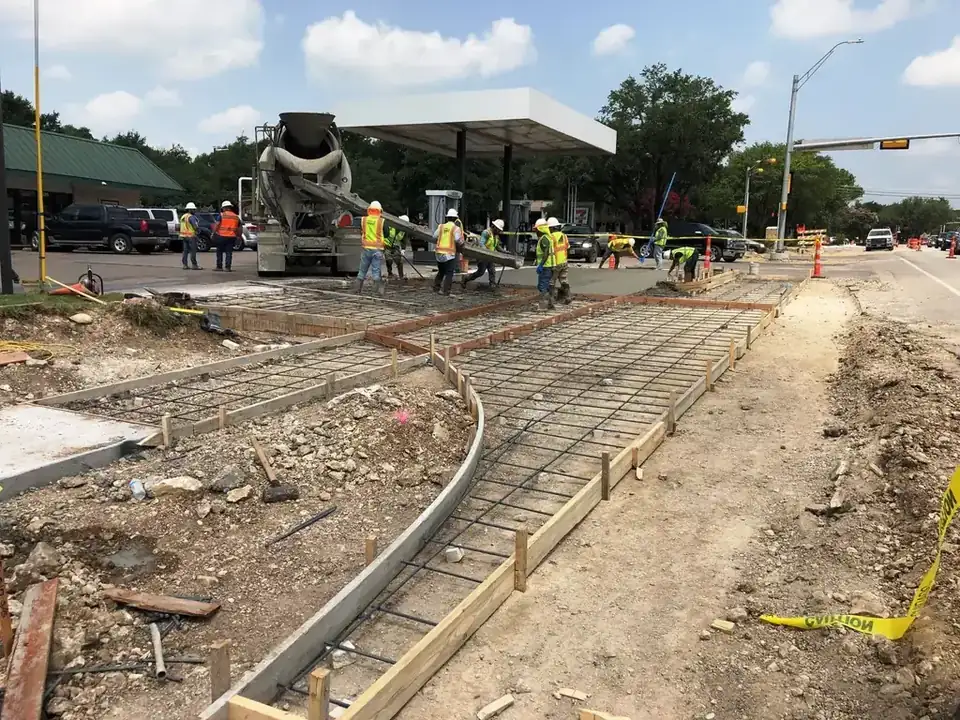
An Aaron Concrete crew placing concrete off a mixer chute at a live Austin intersection
Placing concrete off the chute at a live Austin intersection. Traffic control stays up the whole time the crew is working.
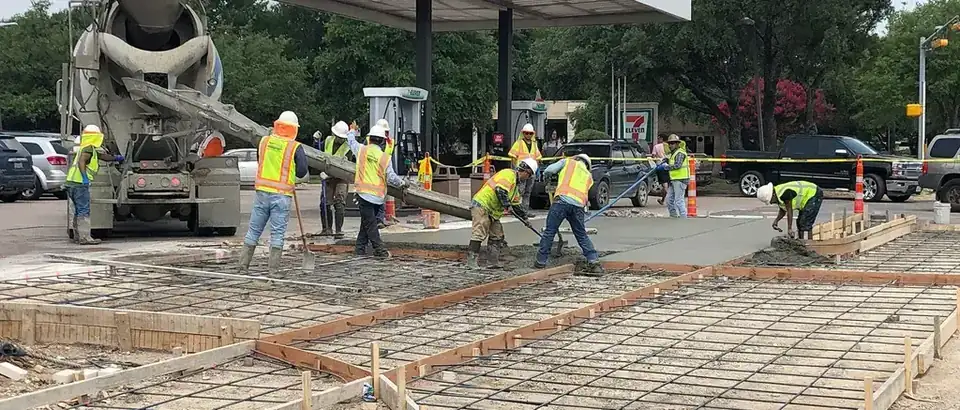
A ten-man Aaron Concrete crew raking and screeding the same intersection pour
The same pour, ten men raking and screeding it before the surface sets.
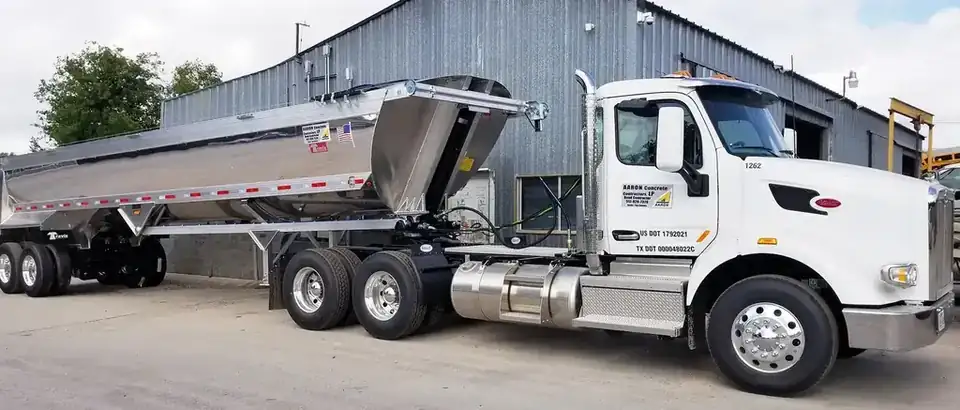
An Aaron Concrete Peterbilt tractor and polished belly-dump trailer lettered Austin and San Antonio
The fleet that hauls material to and from every one of these jobs.
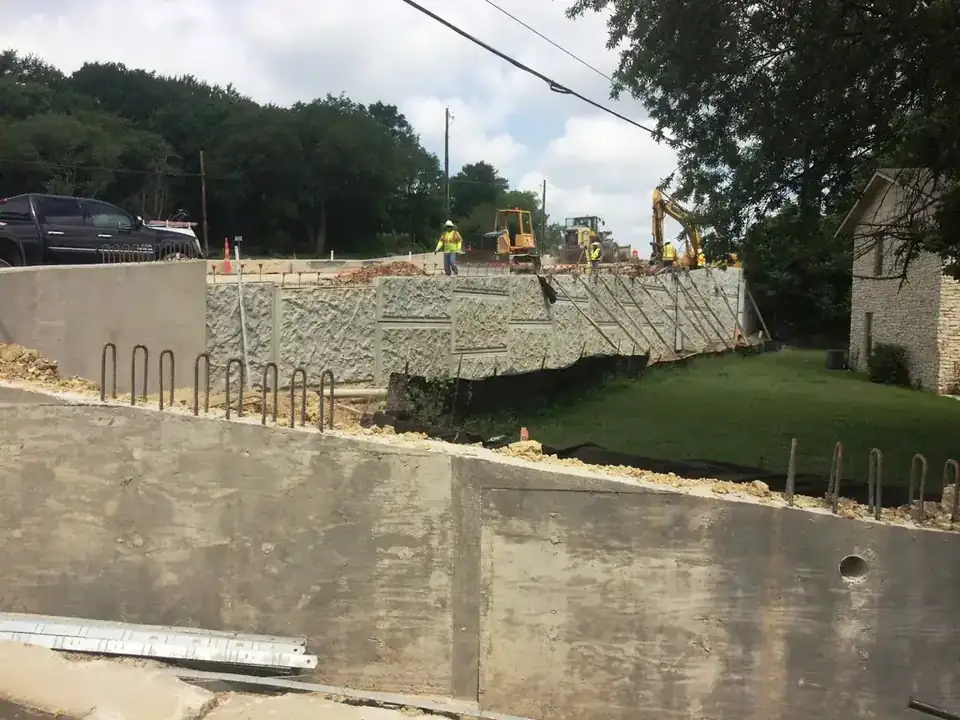
Formliner-textured retaining wall panels under construction in Bee Cave, with a dozer and loader behind
A formliner-textured retaining wall going up in Bee Cave, rebar dowels set and the dozer and loader still working behind it.
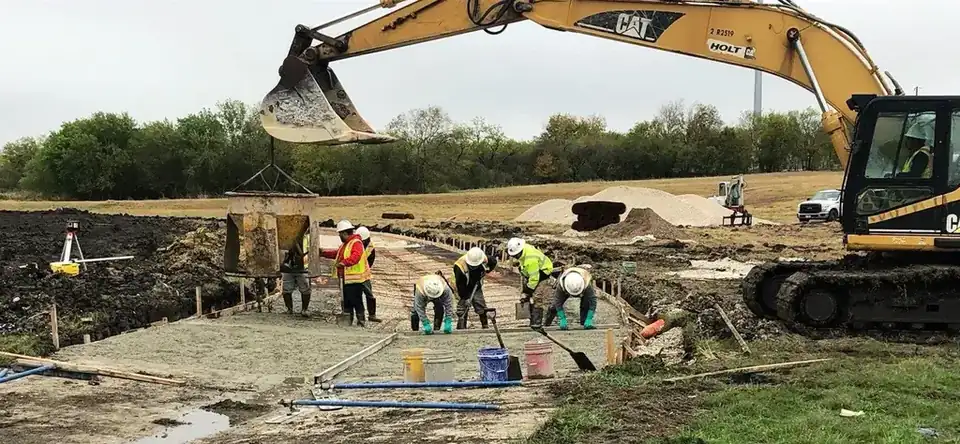
A crew hand-finishing a formed slab with a concrete bucket slung from a CAT excavator and a survey tripod set nearby
Hand-finishing a formed slab. The bucket is slung off the excavator and the tripod is holding grade.
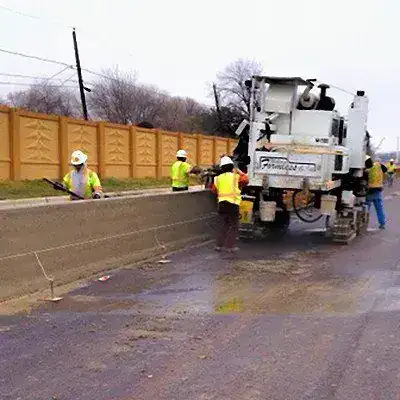
A slipform paver laying a textured barrier wall panel
The slipform paver running continuous barrier wall. This is the only photograph of it in the set, and the crews run this machine on almost every highway job.

STA 24+00 · Below grade

Utilities, culvert and earthwork

Most of a roadway job is finished before anyone can see it.

A box culvert set beneath a live overpass, a manhole barrel lowered into a trench box, a subgrade brought to line and grade. None of it stays visible once the road is paved back over it, which is exactly why it matters that it gets done right the first time. Curb finished by hand closes out this chapter, for the runs where the geometry is too tight for the machine.
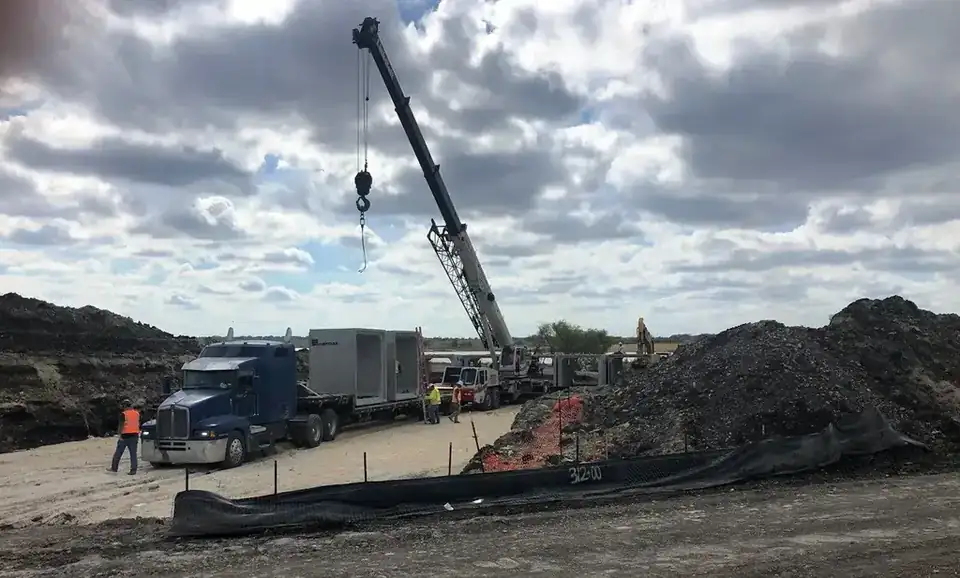
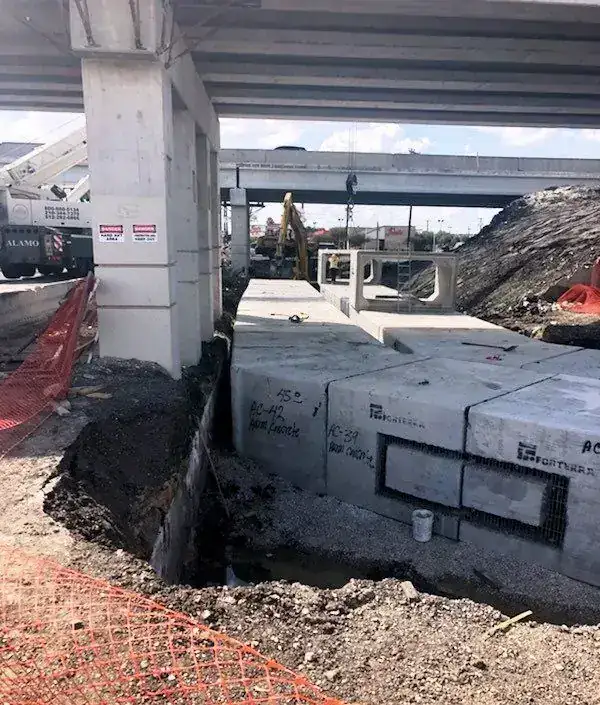
A mobile crane setting a precast box culvert section off a lowboy, silt fence in the foreground stencilled 312+00
Setting a precast box culvert section off a lowboy. The silt fence behind it is stencilled with the station, 312+00, which is where the STATION RAIL running down this site's left margin comes from.
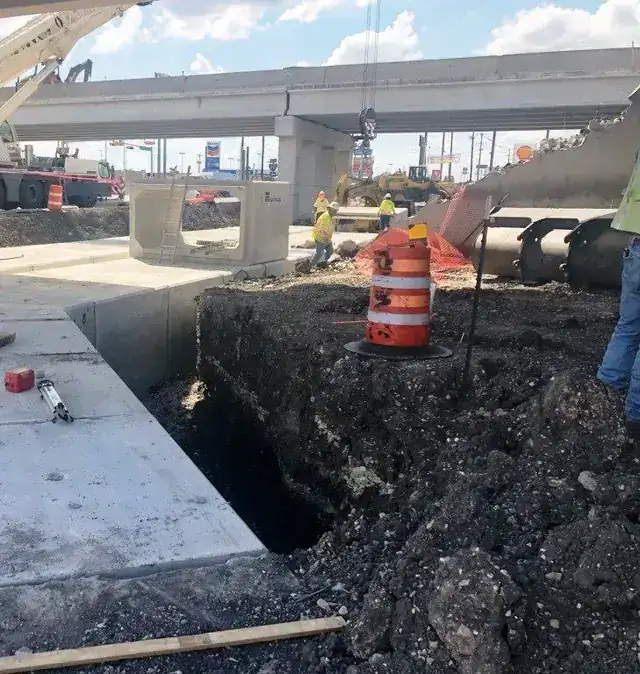
Box culvert runs stencilled AC-42 Aaron Concrete, set beneath a live highway overpass
Box culvert runs stencilled AC-42 and AC-39, set beneath a live overpass while traffic keeps moving above.
The same box culvert job: a culvert run and a sawcut asphalt trench with a crew working
The same culvert job, further along: the trench sawcut through the asphalt and the crew working it.
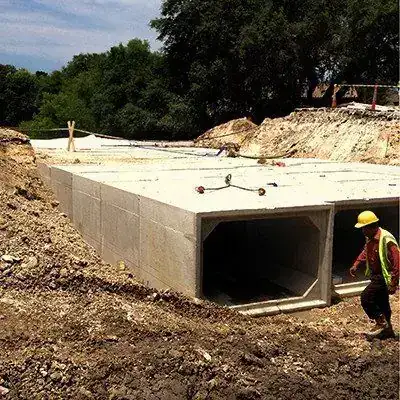
A finished precast box culvert and headwall, a worker walking out of the trench
The finished culvert and headwall, backfilled and ready to pave over.
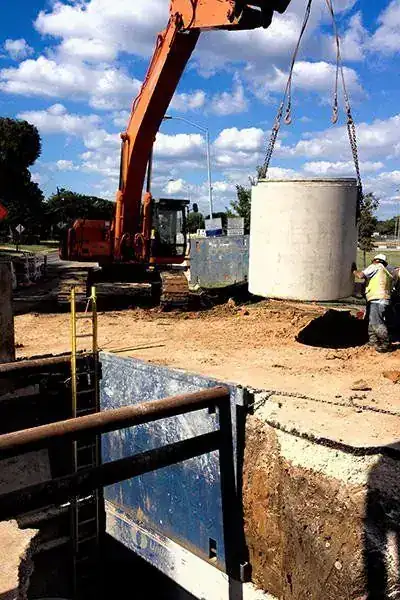
An excavator setting a precast manhole barrel over a trench box
Setting a precast manhole barrel over a trench box.
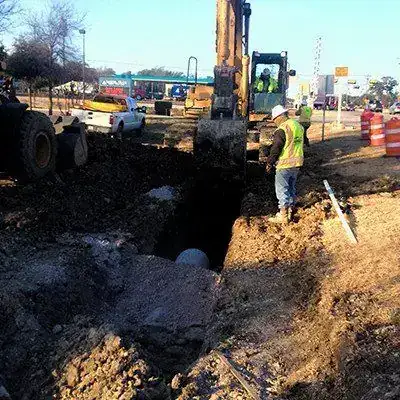
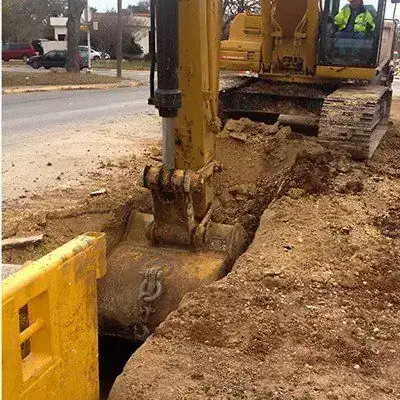
An excavator digging a utility trench in a street, pipe exposed and cones out
A utility trench open in a street, pipe exposed and cones marking the work zone.
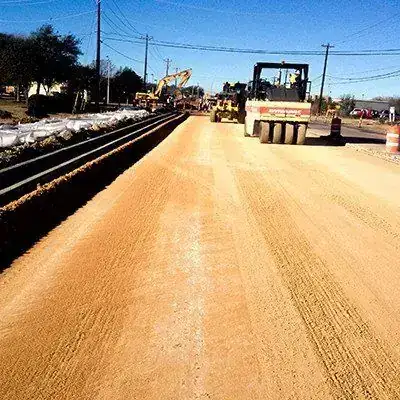
A prepared roadway subgrade with a curb line run and a grader working behind it
Subgrade brought to line and grade before base ever gets ordered.
An excavator bucket working a trench, close
Digging out a trench, close in on the bucket.
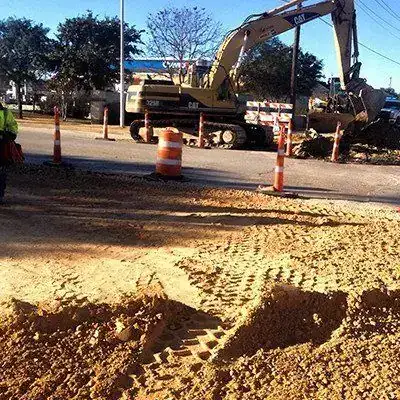
A CAT excavator working in a street with road base spread and traffic control barrels out
Base spread and traffic control up on a live street.
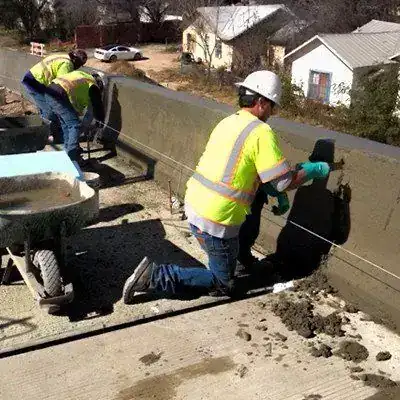
Two men hand-finishing a curb with a float and a mortar tub
Curb finished by hand, float and mortar tub, where the run is too tight for the machine.
STA 41+00 · At the yard

Aransas Pass

Two hundred miles south, the crusher runs on the same clock.

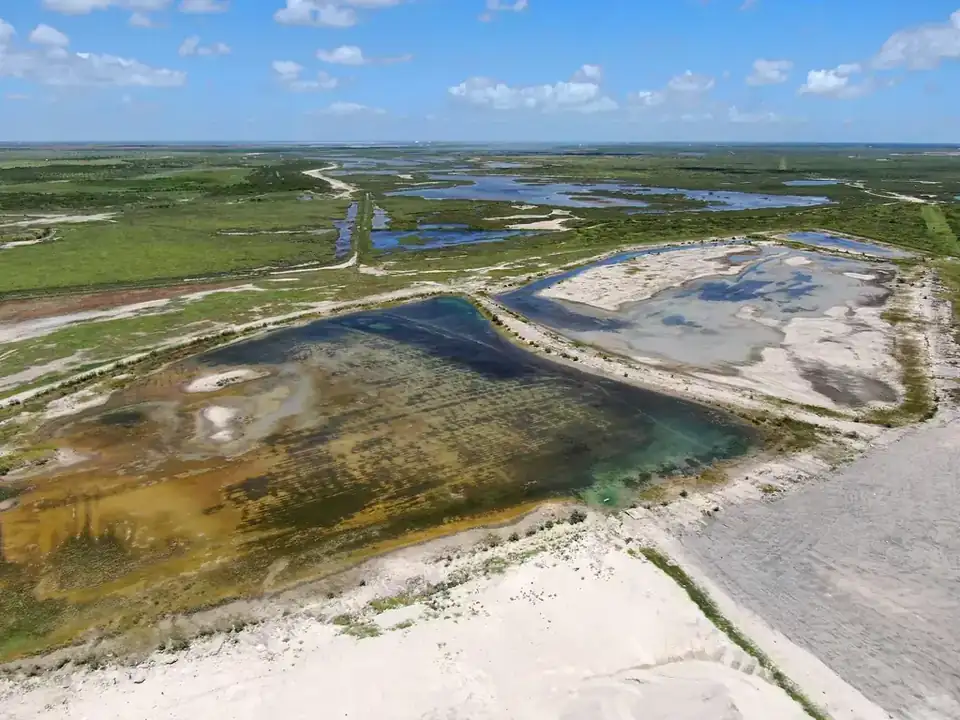
The Aransas Pass yard is where the old road comes back. Clean rubble crosses the scale, gets crushed and screened, and gets stockpiled apart by grade until somebody buys it back by the load. The cement tanker and silo cover the other side of the operation, the supply side, and the yard backs right up against the coastal wetland.
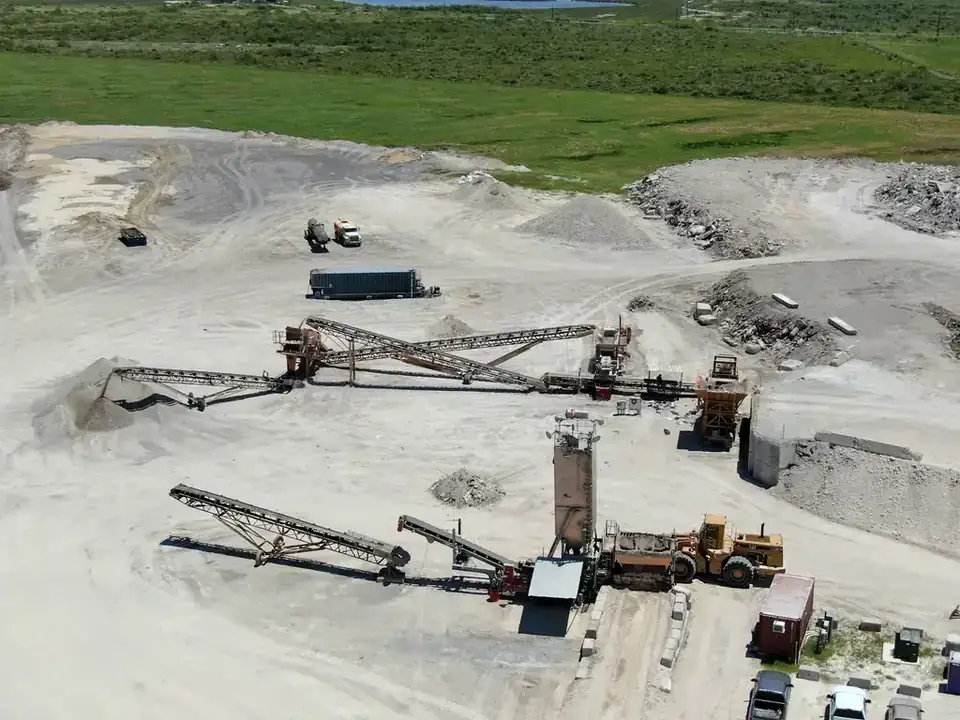
Aerial view of the Aransas Pass yard, showing the crusher and screen train, conveyor stackers and a CAT 988 loader
The Aransas Pass yard from the air: the crusher and screen train, the conveyor stackers, and the CAT 988 loader working the pile.
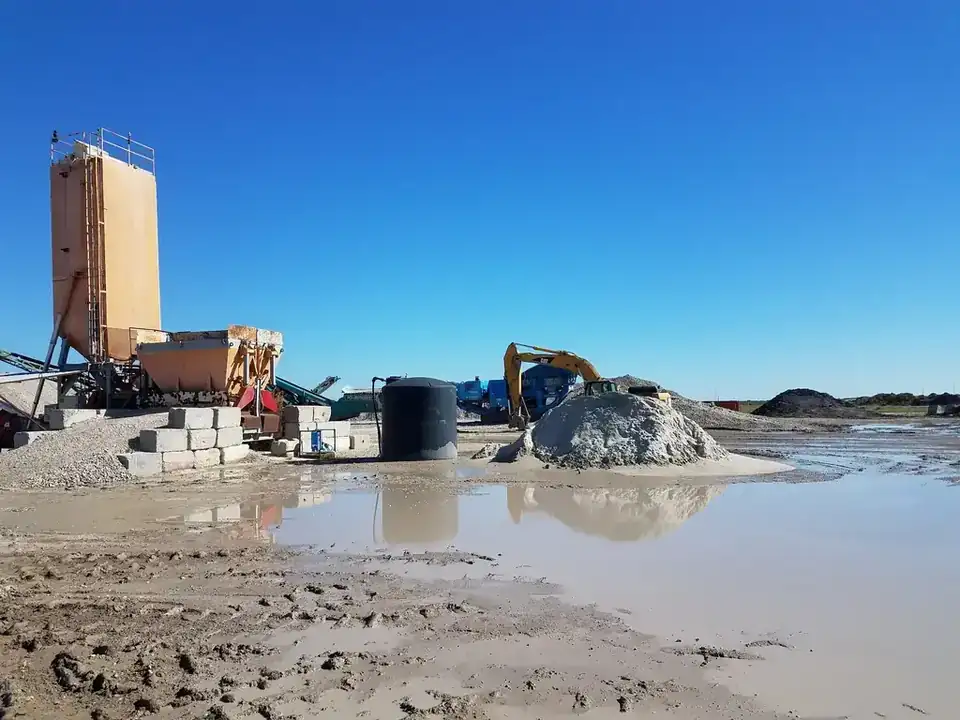
The yard: a silo, a Powerscreen crusher and a CAT excavator beside crushed stockpiles reflected in standing water
Silo, crusher and excavator, with crushed stockpile reflected in the standing water after rain.
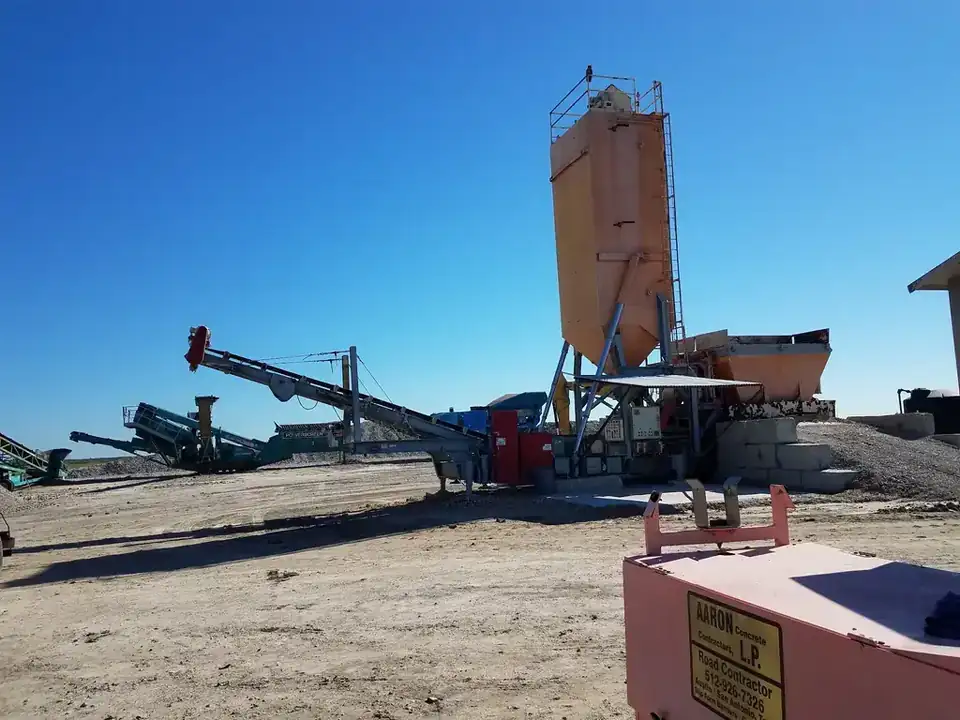
The batch plant and crusher, with the yard's own yellow sign in the foreground
The batch plant and crusher, the yard's own yellow sign standing in front of it.
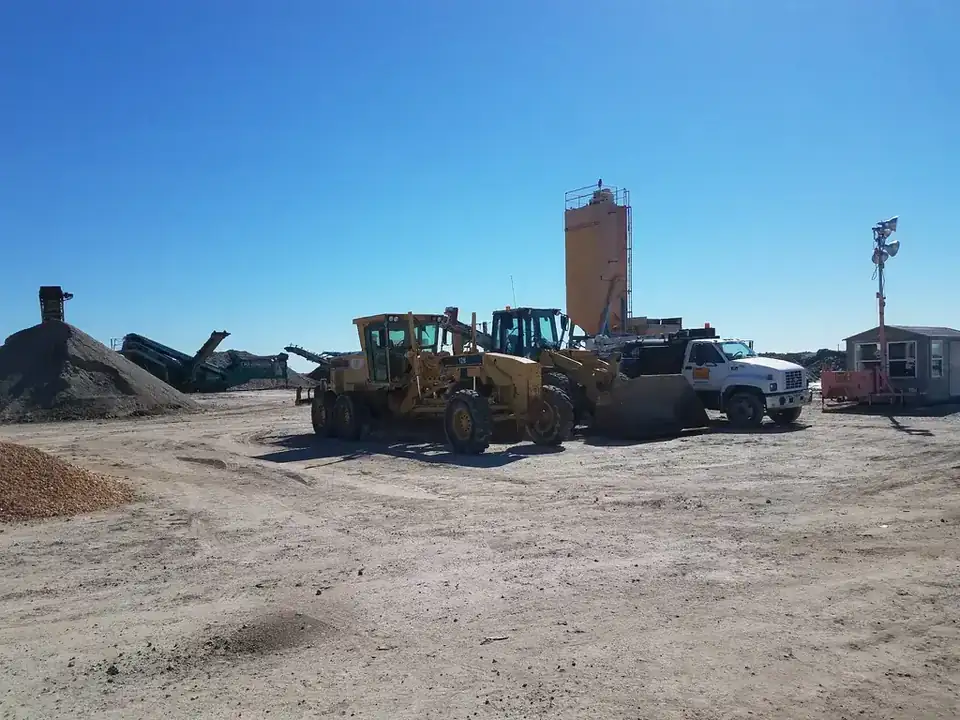
A CAT motor grader, wheel loader and service truck parked near the silo and scale house
Motor grader, wheel loader and service truck, parked up near the silo and the scale house.
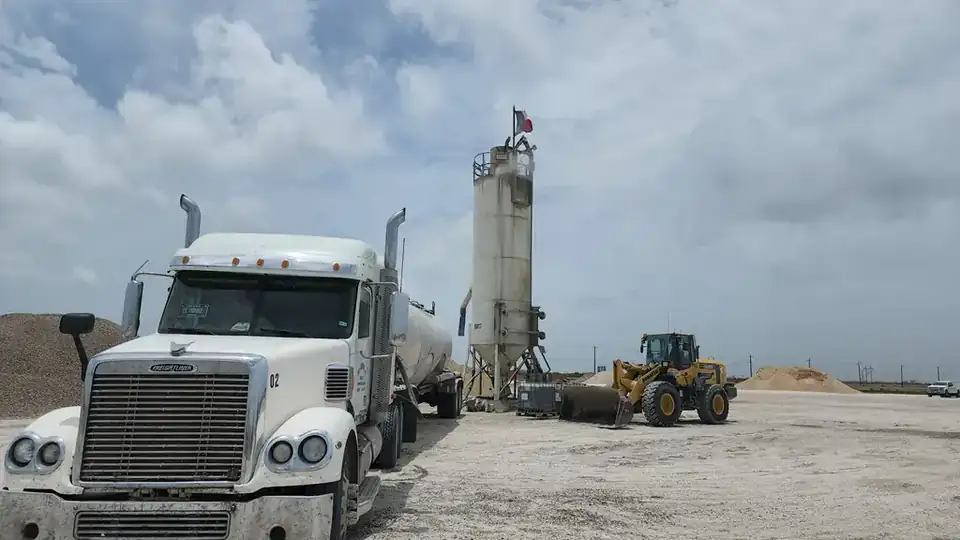
A Freightliner cement tanker beside a silo flying a Texas flag and a Komatsu loader
The cement tanker and the silo it feeds. The flag on top is a Texas flag, not decoration.
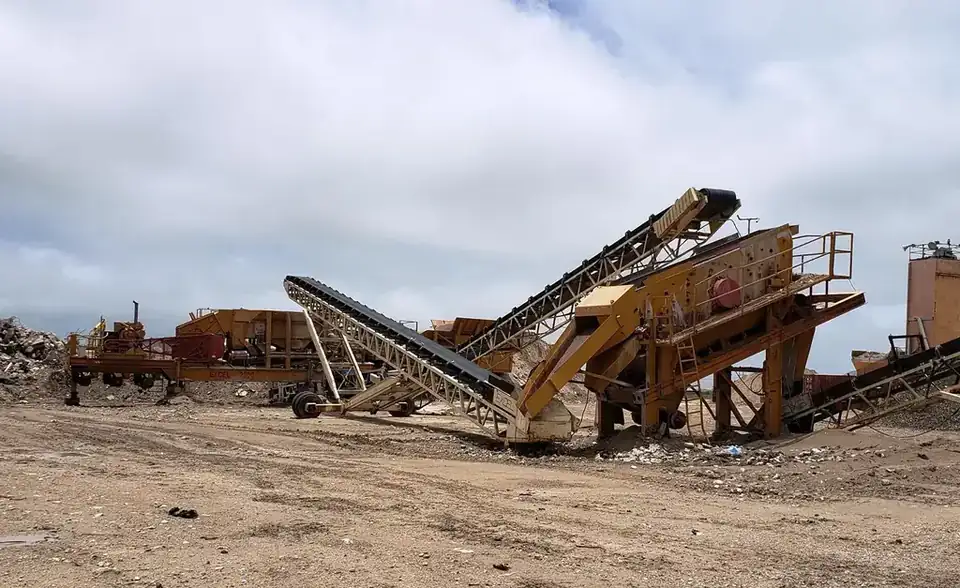
An Excel 2200 crushing and screening train running at the Aransas Pass yard
The Excel 2200, the crusher that does the actual work of turning slab back into base.
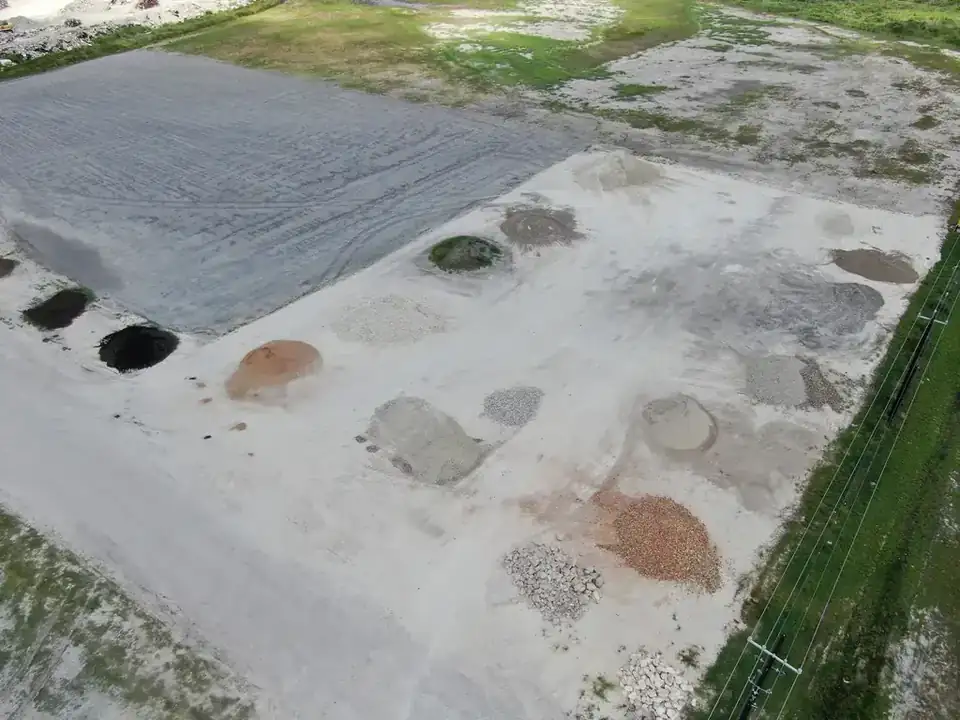
Aerial view straight down on a dozen separated stockpiles at the materials yard
Straight down on the stockpiles. Base, sand, riprap and topsoil, each kept in its own pile.
Aerial view of the yard's edge meeting the coastal wetland at Aransas Pass
Where the yard ends and the coastal wetland starts. The work runs right up to the tree line.